Body and movement2 min read
Why your weight changes from day to day, and why the trend matters more
Your weight can shift up to about 1 kg (2.2 lb) from one day to the next with no change in fat. See what causes daily swings on GLP-1 and how to weigh yourself.
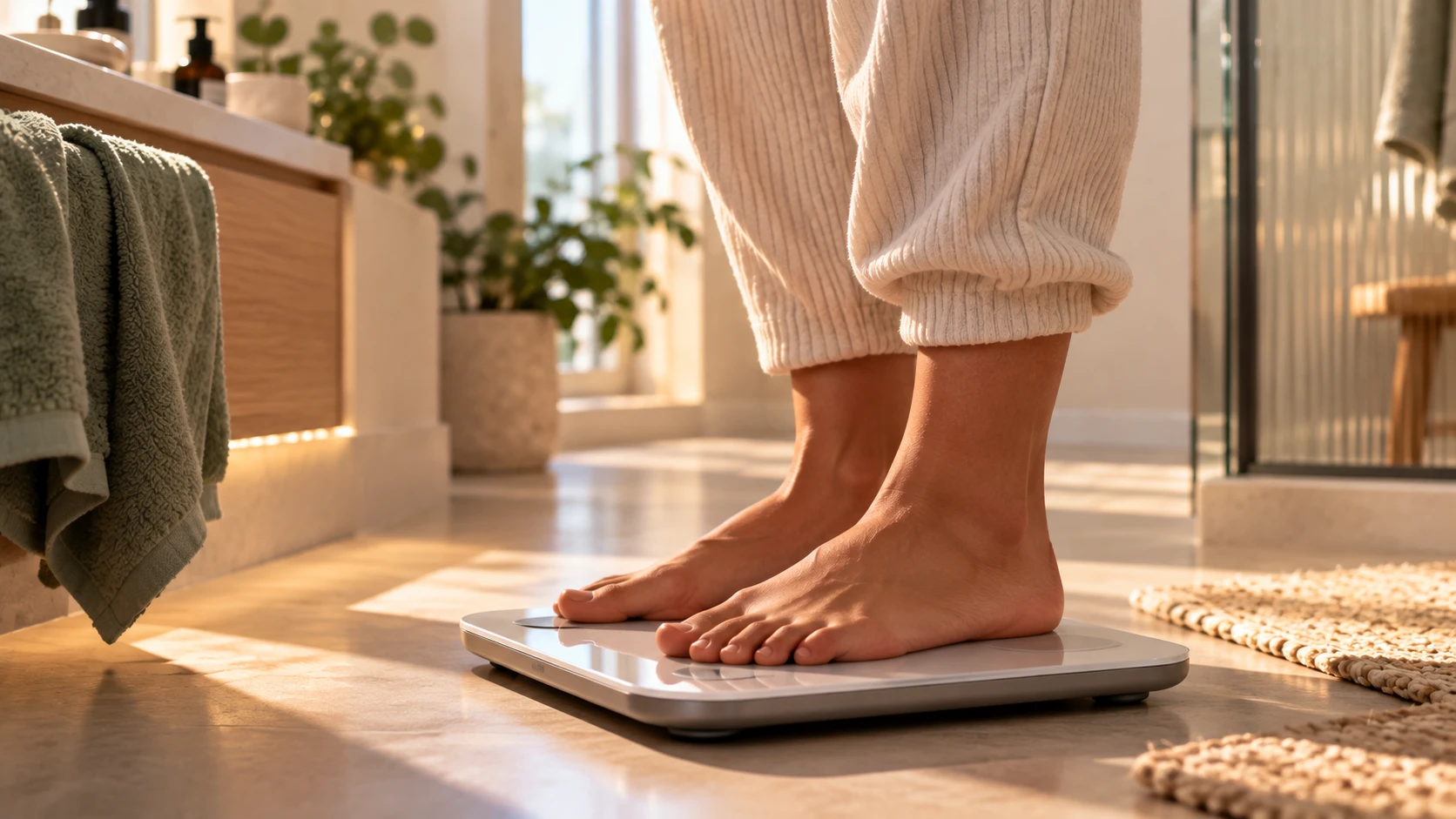
What moves the scale from one day to the next
The scale measures everything in your body at that moment, not just fat. That’s why the number changes even when nothing has really changed. The most common reasons:
- Water and salt: how much fluid your body is holding on to that day.
- Bowels: what hasn’t come out yet weighs something too, and constipation is one of the common side effects of treatment.
- Menstrual cycle: weight shifts over the course of the month.
- Time of day: the same body weighs differently at different hours.
- Weekends: many people weigh a little more after one, and it comes back down over the week.
Why the trend tells you more
On treatment, every number on the scale can feel like a verdict. It isn’t: a difference of up to about 1 kg (2.2 lb) from one day to the next falls within normal fluctuation.
A single weigh-in is a snapshot of one day. When you compare the average of several weigh-ins, rather than one against another, the swings from water, salt and bowels count for much less, and what’s left is your real path.
A single uptick, on its own, says nothing about the treatment. If your weight stays put for several weeks in a row, that’s a different conversation: a plateau, which is common and worth bringing to the people who care for you.
How to weigh yourself so the line is reliable
The swings won’t go away, but you can keep them from muddying the picture.
- At the same time of day and under the same conditions, whenever you can.
- If you weigh yourself once a week, pick the same day of the week. That way the weekend difference is the same at both ends of the comparison.
- If you already weigh yourself every day, look at the weekly average, not the single day.
- Don’t overdo it. In digital care programs, logging weight once a week, consistently, went hand in hand with staying on treatment longer; weighing in many times during the first month went hand in hand with worse results. These are observational studies: they show an association, not cause and effect.
In Morphi
We put your weight, waist and measurements in charts that show the trend over weeks, not one day’s swing.