Symptoms3 min read
Diarrhea on GLP-1: self-care and when to get help
How to replace fluids, what to eat and what to avoid when diarrhea comes up on a GLP-1 medication, and which signs need care.
Why it happens
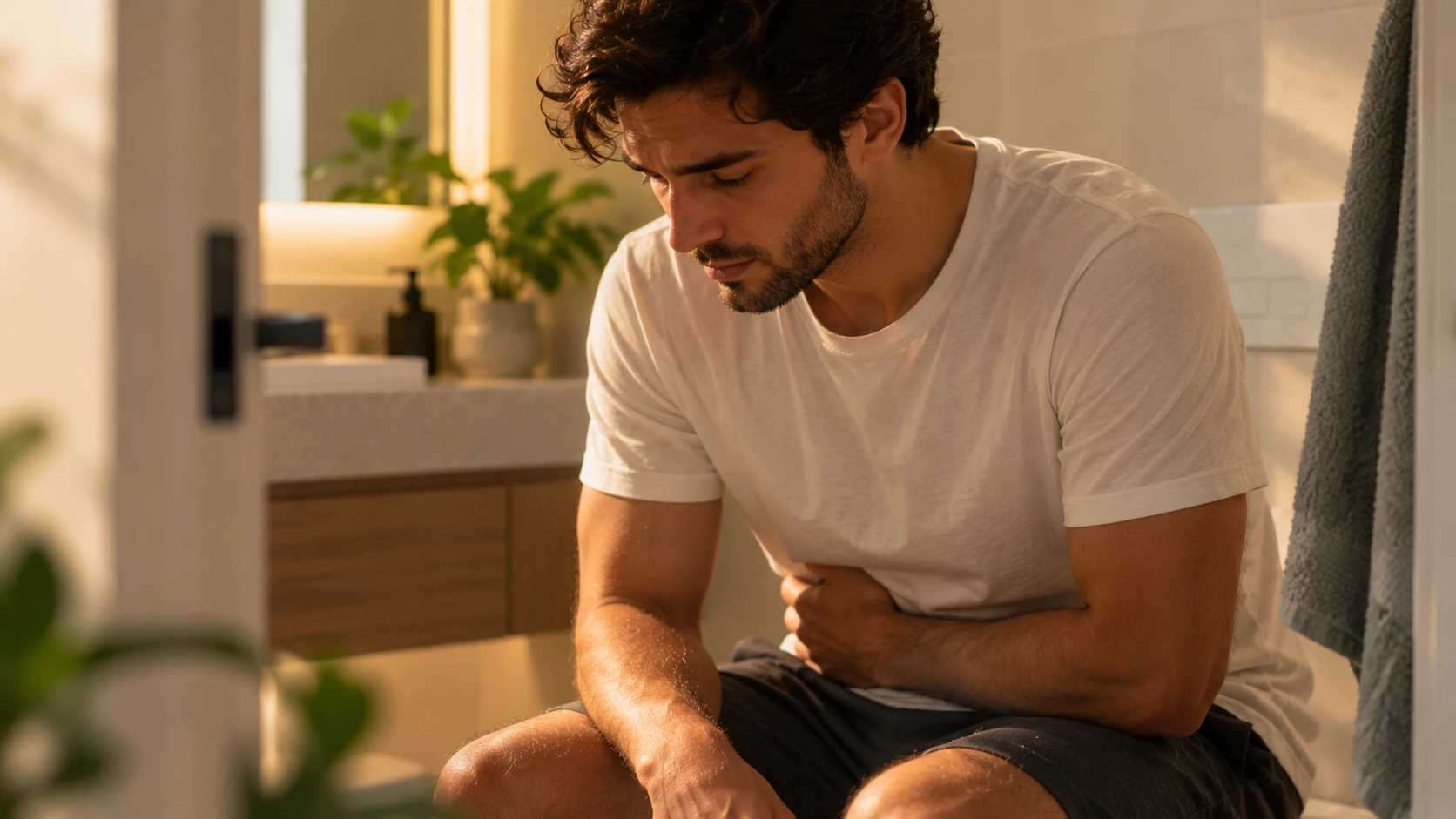
Effects on the stomach and gut, diarrhea among them, are the most common side effects of GLP-1 medications like semaglutide (Ozempic, Wegovy, Rybelsus) and tirzepatide (Mounjaro). They’re concentrated at the start and in the days and weeks after each dose increase, and they usually ease over time.
Loose bowels take water and salt with them, more than thirst can keep up with. That’s why care starts with fluids.
What usually helps
While the diarrhea lasts:
- Drink throughout the day, in sips, without waiting to feel thirsty.
- Oral rehydration solution also replaces salts.
- Choose light food.
- For a few days, avoid fat, fried food, alcohol, coffee, a lot of fiber and sweeteners ending in "-ol", like sorbitol and xylitol.
Before any water or rehydration solution
If you have heart failure or kidney disease (including if you’re on dialysis), or your care team has given you a fluid or salt limit, follow that limit; in these cases, oral rehydration solution is only with your care team’s guidance.
If you take a diuretic or a blood pressure or diabetes medication, let the people who care for you know the same day, even without signs of dehydration: losing fluid while on these medications can affect the kidneys.
Medication for your bowels
Take medication for your bowels, including over-the-counter ones, only with guidance from the people who care for you. The same goes for homemade rehydration drinks, teas and supplements: some interact with medications or are hard on the kidneys or the heart.
Changing or delaying your dose because of diarrhea is a decision for the person who prescribes it, never something to do on your own. What helps that conversation is a record of how many days it lasted and what phase of the cycle it showed up in.
If you take birth control pills
Severe diarrhea for more than 24 hours can mean the pill doesn’t protect you. Follow what your pill’s package insert says for a missed pill, use condoms until then and talk to the people who care for you.
With tirzepatide (Mounjaro), there’s one more thing to watch, even without diarrhea: it can make the pill less effective. Its prescribing information says to add condoms, or use a method you don’t take by mouth, like an IUD, implant, patch or ring, for 4 weeks after the first dose and after each dose increase.
When to talk to your care team
If your bowels are still loose the next day, or stay loose on several days of the week, let the people who care for you know without waiting for your appointment, and drink more water in the meantime.
When to get help
Seek urgent care when diarrhea won’t stop, when there’s blood in your stool, or when signs of severe dehydration show up: little or no urine, severe dizziness, confusion, or not being able to keep even water down. Fever or severe belly pain along with diarrhea also needs same-day care, without waiting for it to get better.
In Morphi
You log your bowels in your symptoms and see how they change across your dose cycle, with your water goal one tap away. The one-page summary brings those days to your appointment.