Food2 min read
How much protein to eat on GLP-1 treatment, and why
Why protein matters more when your appetite drops on GLP-1, how much guidelines suggest per day and how to spread it across meals to protect muscle.

Why protein matters more now
All weight loss takes some lean mass with it, not just fat. Lean mass isn’t only muscle: it includes water, organs and bone. This happens with any way of losing weight, not just with GLP-1 treatment: in the studies of semaglutide (Ozempic, Wegovy) and tirzepatide (Mounjaro), the share of lean mass in the weight lost was similar to other ways of losing weight.
What changes on treatment is appetite. With less hunger, meals get smaller, and protein is the first thing left behind. That’s when muscle loss matters most.
How much per day
The joint advisory on nutrition in GLP-1 treatment, from four American nutrition and obesity societies, starts from the general recommendation of 0.8 g per kilogram per day. For the weight-loss phase, it notes that higher targets have been proposed: 1.2 to 1.6 g per kilogram per day, or 80 to 120 g per day in absolute terms.
The same advisory points out that it isn’t yet known which weight to use in that calculation, and that it’s best not to spend long periods at 2 g per kilogram per day or more. That’s why each person’s goal is decided with their care team.
How to get there with a small appetite
More than the daily total, it helps to spread protein across your meals.
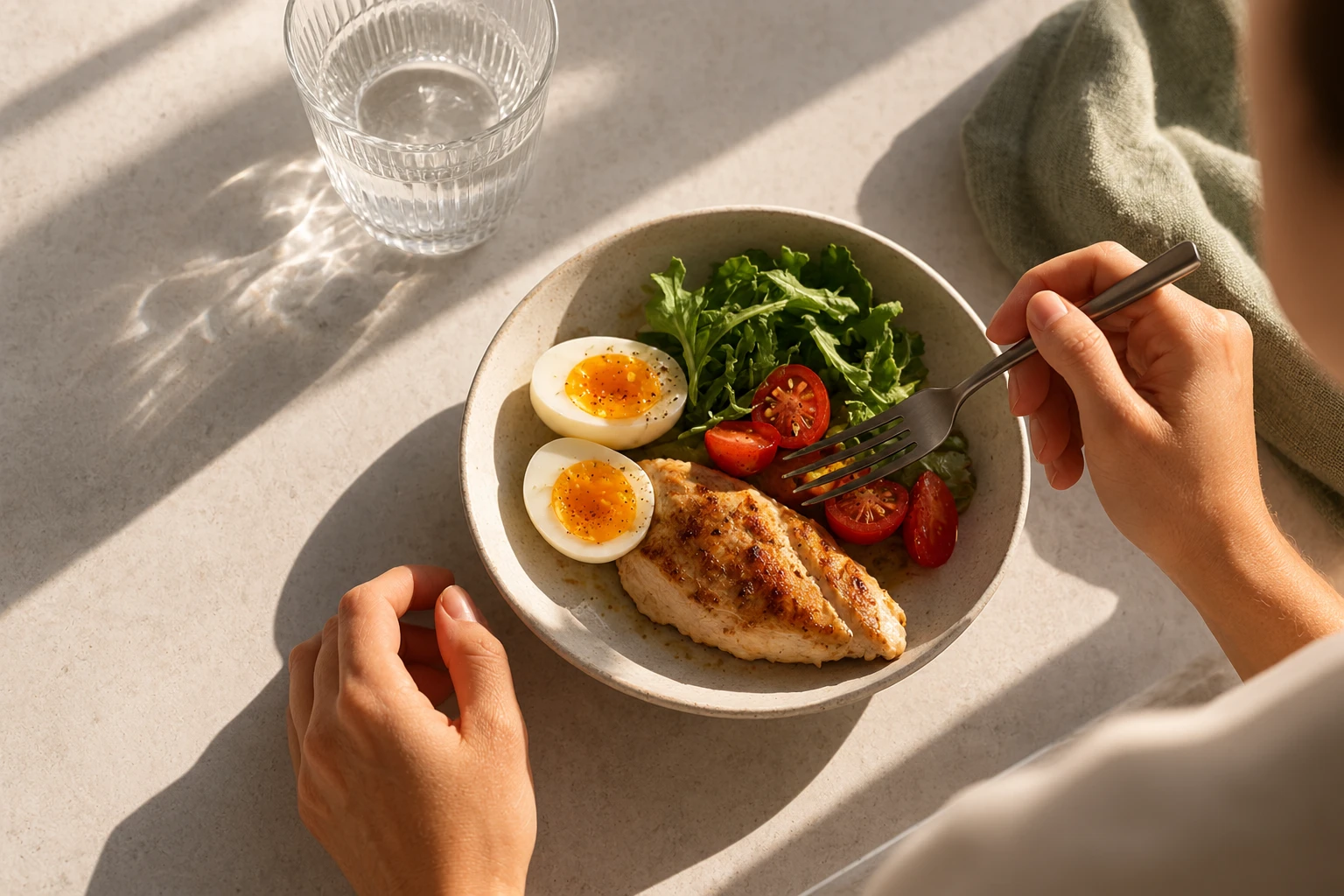
- Start your meal with the protein. If your appetite runs out halfway through the plate, the protein won’t be what’s left behind.
- Have protein at every meal, including breakfast and snacks.
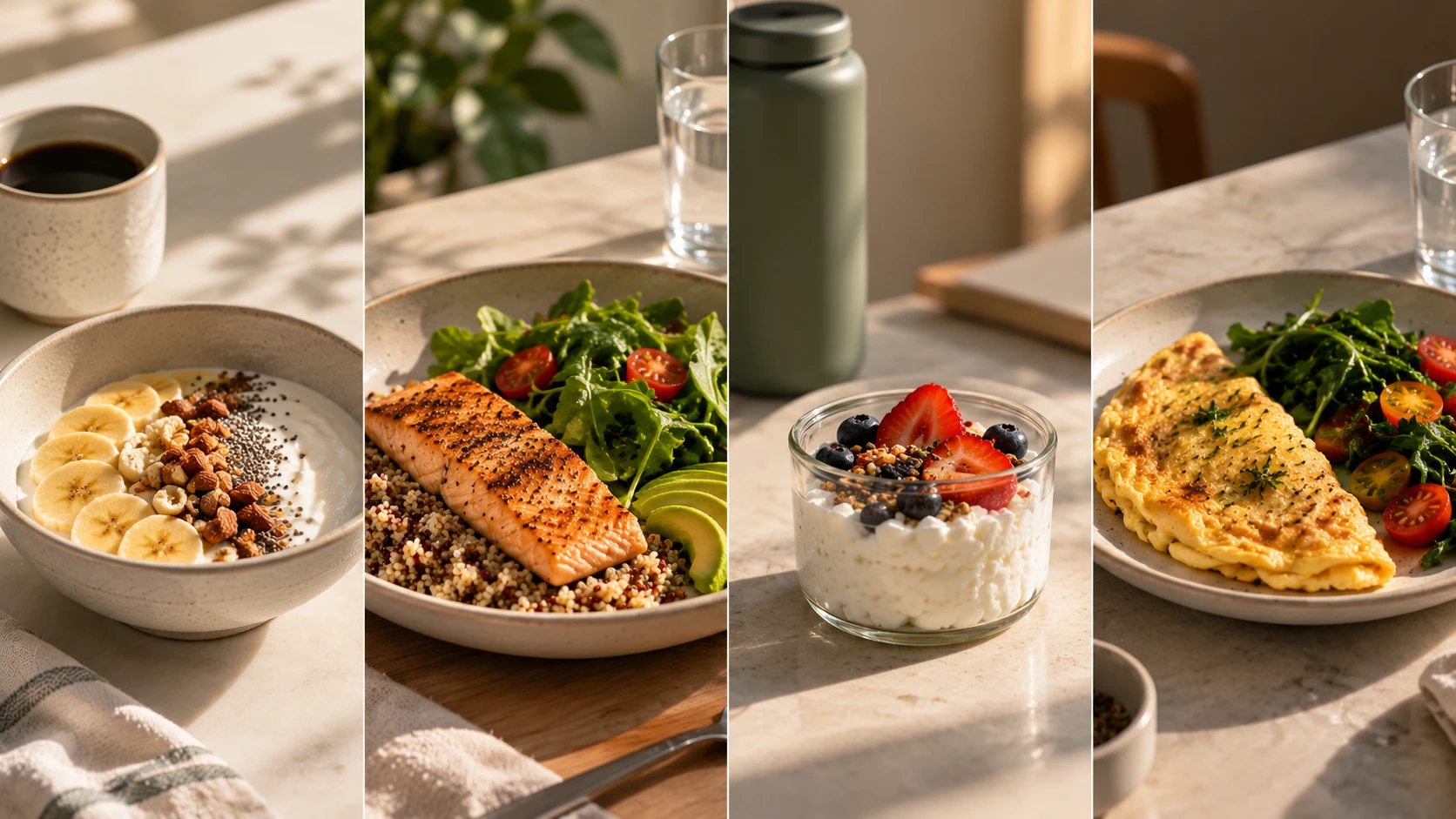
- Choose what’s easy to eat in small amounts: eggs, plain or Greek yogurt, cheese, milk.
- Mix animal and plant sources: chicken, fish, lean meat, tofu, beans, lentils, chickpeas.
The other pillar: strength training
Protein is the building material; strength training is the signal that tells your body to keep muscle. The World Health Organization recommends muscle-strengthening activity at least twice a week, and the GLP-1 advisory suggests three times, along with at least 150 minutes of moderate aerobic activity a week.
When to get help
If you have kidney disease or have had kidney stones, you need a goal of your own, decided with your care team. In moderate to advanced chronic kidney disease, the reference is much lower than the weight-loss targets.
In Morphi
You set your protein goal, take a photo of your plate or say what it is, and see how much is still left for the day. The photo suggests the items, and you correct them before saving.