Food2 min read
Where to find protein every day, meal by meal
Protein foods for every meal of the day, easy to eat with a small appetite on GLP-1: breakfast, lunch, dinner and snacks.
Why spread it across the day
On GLP-1 treatment, like semaglutide (Ozempic, Wegovy) or tirzepatide (Mounjaro), appetite drops and meals get smaller, and protein is the first thing left behind. Protein, along with strength training, is what helps you keep muscle while your body changes.
More than the daily total, it helps to spread protein across your meals. When you eat little, a bit at each meal is easier than trying to make it all up at dinner.
At breakfast
The first meal of the day counts as much as the others, even when it’s small.
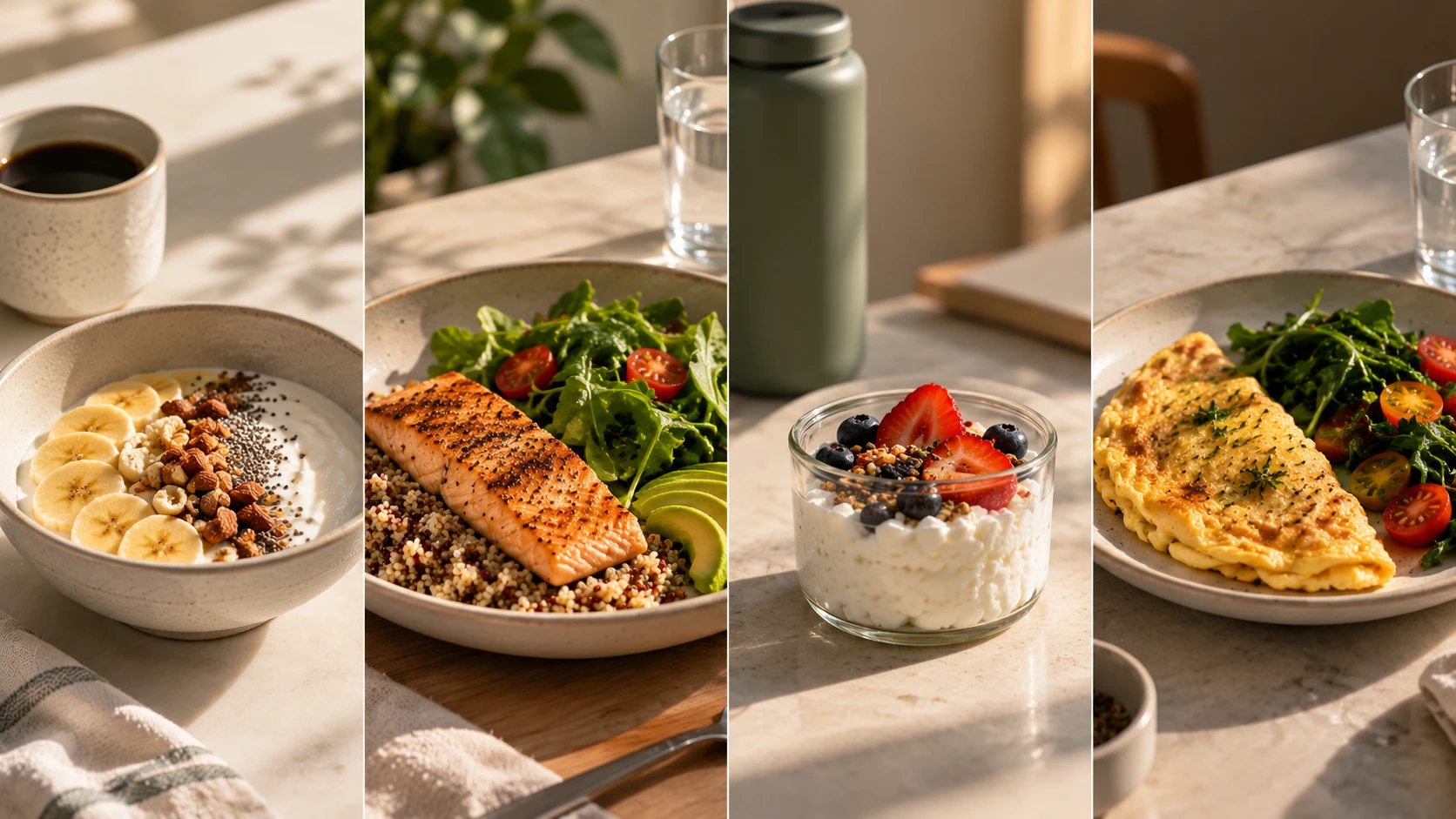
- Eggs, scrambled or boiled, with cottage cheese.
- Plain or Greek yogurt, with oats.
- Milk, on its own or in your coffee.
- Toast or a tortilla with cheese, egg or shredded chicken.
At lunch and dinner
Start your plate with the protein, and leave the rest for later.
- Chicken, fish or lean meat.
- Beans, lentils or chickpeas, which bring fiber too.
- Tofu, if you prefer plant protein or want some variety.
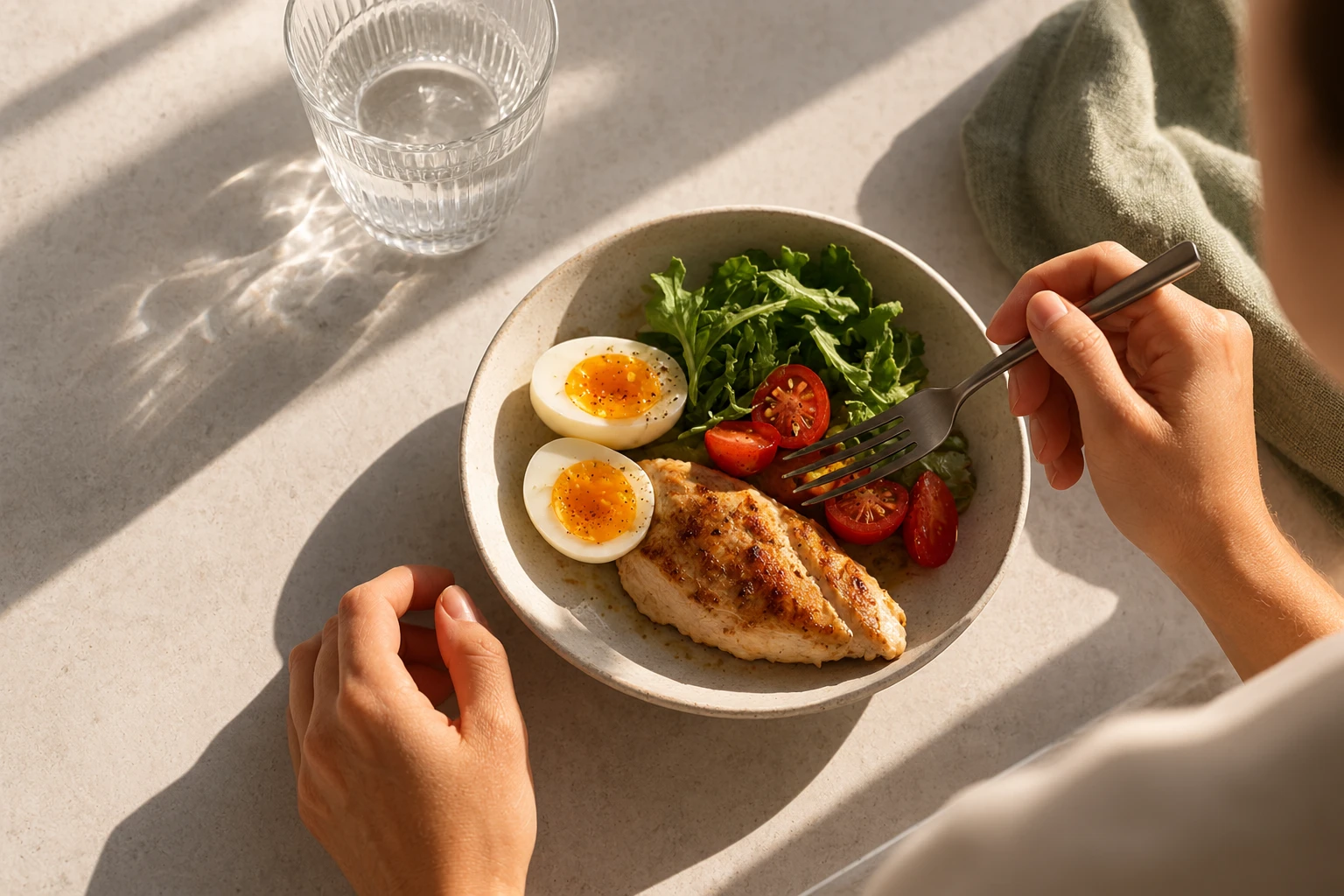
- An egg, when there’s no other protein on the plate.
For snacks
With a small appetite, the right snack is the one that goes down easily in a small amount. At set times, without waiting for hunger, snacks keep your protein from depending only on lunch and dinner.
- Plain or Greek yogurt.
- A hard-boiled egg.
- Cheese.
- A glass of milk.
- When food won’t go down, a protein drink.
Animal and plant
It’s worth mixing the two. Chicken, fish, eggs and dairy fit easily into small portions; beans, lentils and chickpeas add protein and fiber, which helps your bowels. Increase fiber gradually, and with water. On days of strong nausea, high-fiber foods sit worse, and it’s worth waiting until the nausea eases.
How much per day
The joint advisory on nutrition in GLP-1 treatment starts from the general recommendation of 0.8 g per kilogram per day, and notes that targets of 1.2 to 1.6 g per kilogram have been proposed during weight loss. It isn’t yet known which weight to use in that calculation, so your goal is the one you set with your care team.
When to get help
If you have kidney disease or have had kidney stones, you need a protein goal of your own, decided with your care team, including how much of that protein comes from animal sources. In moderate to advanced chronic kidney disease, the reference is much lower than the weight-loss targets.
In Morphi
You set your protein goal, take a photo of your plate or say what it is, and see how much is still left for the day. The photo suggests the items, and you correct them before saving.